3 min read
The work happens before it shows
The visible result is usually the release of work that has already been done.
There are stretches of work where nothing public moves. The product still looks unfinished. The writing still looks thin. From the outside, the week produced almost nothing.
I used to treat those stretches as empty. If I could not point to a result, I assumed I had not done the work.
That is a bad measure. Most of the work that later looks sudden is not sudden. It is stored.
Sun Tzu describes a victorious force as pent-up water bursting into a chasm a thousand fathoms deep. The violence of the drop is not created when the dam opens. It is created by the height, the volume and the wait.
The Chinese word is 勢, shi. Translators argue over it: energy, momentum, strategic advantage, situational potential. The useful meaning is simpler. Power that has been arranged so it can move on its own.
Effort still matters. You have to fill the reservoir. You have to choose the ground. You have to wait until the ground is actually ready. But effort is the filling. Shi is what happens when the water is finally allowed to fall.
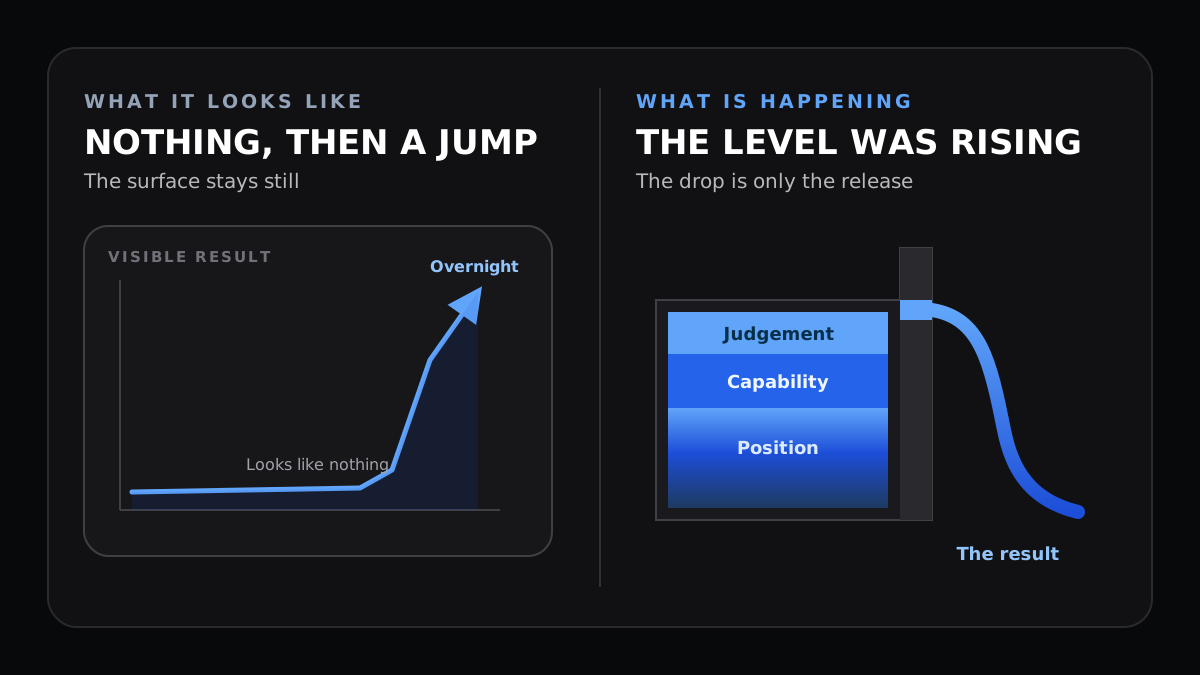
The diagram has two views because that is how the mistake happens. From above, the surface stays still for a long time and then jumps. Underneath, the level has been rising the whole time.
I feel this most clearly in company-building. A long stretch of hiring, product decisions, conversations and small systems that only I can see can look like delay. Then something public happens. A launch. A piece of writing. A person who suddenly understands the company. It looks as if that week created the result.
It did not. That week released it.
The same thing happens in writing. An article can look like it arrived in an afternoon. The afternoon only works because the argument has already been lived. I have already made the mistake, already sat with the tension, already thrown away the first framing. The draft is the drop. The thinking was the reservoir.
This is easy to romanticise. I do not mean that every quiet period is deep work. Some quiet periods are just avoidance. Planning can be procrastination. So can research. So can another tool, another rewrite, another delay dressed up as timing.
The test is whether the reservoir is actually filling. Am I getting better at the thing? Is the position improving? Is judgement getting sharper? Or am I standing next to an empty dam and calling the wait a strategy?
Shi is not patience as a personality trait. It is accumulated advantage. If nothing is accumulating, waiting is just waiting.
A good day can also hide this. Visible output is easy to count. Stored position is not. A busy week can look like progress while the reservoir stays empty. A quiet week can look like nothing while the level rises.
When the conditions are right, the job changes. You stop pushing. You open the gate. More effort at that point can even get in the way. The water already wants to fall.
I still need the judgement to tell those two moments apart. Capability does not answer that. Timing does. That is the part nobody else can do for me.