5 min read
You practise distraction
Every casual context switch teaches attention to expect another interruption.
I noticed the problem during a coding session when nothing had actually interrupted me. My phone was quiet. No one needed an answer. I still moved from the code to an agent thread, then to my task list, then back to the code.
Each check took less than a minute. I could tell myself I had lost almost no time. Yet the urge returned a few minutes later, before I had rebuilt a clear picture of the problem.
I had been treating distraction as an event that happened to me. In that session, it behaved more like something I had practised. Repeated switching had taught my attention to expect interruption, even when the environment stopped providing one.
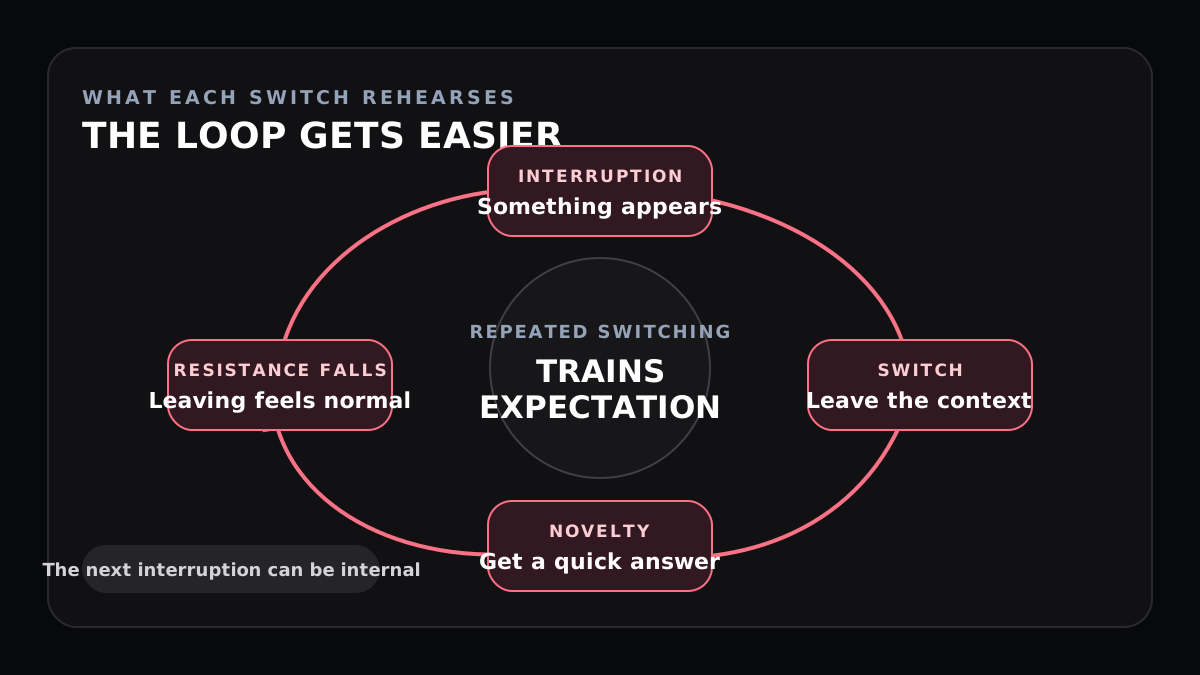
The important part of the diagram is the final link. An interruption does not end when I return to the original task. If the switch gives me novelty or relief, switching becomes easier next time. I have reduced my resistance to the next interruption.
That means the cost compounds. I lose the current thread of thought and change what my attention expects from future work.
Small switches still teach a pattern
Context switching sounds like a problem for people juggling meetings and large projects. Mine often begins with something much smaller. I check whether an agent has finished. I capture an idea but then start organising it. I open a message because reading it will only take a few seconds.
The switch feels justified because each destination relates to work. I am not watching television. I am checking useful things.
Usefulness does not preserve context. The code still has variables, constraints and half-tested assumptions that I need to hold in my head. When I leave, some of that structure fades. Returning is not one click. It is a reconstruction.
The more often I reconstruct, the less normal sustained attention feels. Difficult work begins to seem unusually slow because it cannot match the immediate response of a new message or completed task.
This is how a series of reasonable checks can train an unreasonable expectation: if the current moment becomes uncomfortable, something else should be available.
Novelty rewards leaving
The reward does not need to be pleasure. It can be uncertainty ending.
When I check an agent, I may discover that the task finished. When I open a message, I learn what someone wanted. When I rearrange a plan, I get a brief sense of control. Each switch offers a small answer.
Deep work behaves differently. It can leave me with the same hard question for an hour. Progress is real but not always visible. The reward arrives later.
If I repeatedly leave that delay for a quick answer, I make the contrast stronger. The focused task feels less rewarding, and the alternative becomes easier to choose. Novelty has not only interrupted the work. It has changed the comparison.
I cannot solve this by insisting that I should have more discipline. I need to stop rehearsing the behaviour I want to reduce.
Change what an interruption is allowed to become
My most useful rule is that a new thought can be captured without becoming a new activity. It goes into one inbox in rough form. I do not assign it a project, estimate it or decide when to do it. Those steps would turn capture into a switch.
I also need defined times to review agent work. Running tasks do not require continuous observation. If an agent needs input, that can wait for the next review point unless the task is genuinely urgent.
These boundaries do more than protect a single session. They give attention a different repetition:
- notice the interruption
- record it if necessary
- remain with the chosen task
- reach a planned stopping point
That sequence also becomes easier with practice. Resistance can grow in the same way it was reduced.
What about responsive work
A reasonable objection is that some roles depend on responsiveness. A parent cannot ignore their child. A person supporting a live system cannot wait 4 hours to inspect an alert. A colleague may need a decision before they can continue.
The aim is not to remove legitimate interruption. It is to distinguish it from ambient availability.
I can define which people and events may interrupt a block. I can keep urgent alerts while closing progress feeds. I can tell someone when I will review their work instead of making them compete with everything on my screen.
Real responsibilities need access to my attention. Every possible update does not.
The environment is a practice routine
I used to judge a distracted day by its output. If I completed enough tasks, the checking seemed harmless. That missed the longer effect.
Every work session is also a lesson about how attention should behave. A day of constant useful switching can produce acceptable work while making tomorrow's focus harder.
The implication is practical. I need to judge my tools, notifications and routines by the behaviour they rehearse. If the environment repeatedly rewards leaving, intention alone will not make staying feel normal.